144Hz vs 480Hz gaming monitor – Is the upgrade worth it?
Choosing between a 144Hz and a 480Hz gaming monitor involves weighing significant performance gains against cost and hardware demands. While 144Hz offers a superb experience for most gamers, providing smooth visuals and responsiveness far beyond 60Hz, a 480Hz gaming monitor pushes boundaries for elite competitive play, offering unparalleled fluidity and minimal input lag. The true value of the upgrade depends heavily on your specific games, PC capabilities, and competitive ambitions.
Welcome, fellow gamers! Have you ever found yourself in the middle of an intense shootout or a critical moment in an esports match, wishing your screen could just keep up with your lightning-fast reflexes? You’re not alone. The quest for smoother gameplay and a competitive edge has driven monitor technology forward at an incredible pace, bringing us to a fascinating crossroads today: the battle between 144Hz and 480Hz gaming monitors.
For years, 144Hz was considered the gold standard for high-refresh-rate gaming, a significant leap from the traditional 60Hz. It offered a level of fluidity and responsiveness that felt revolutionary. But technology never stands still, and now, we’re seeing the emergence of ultra-high refresh rate monitors, pushing the boundaries all the way to a mind-boggling 480Hz. This opens up a crucial question for every enthusiast and competitive player out there: 144Hz vs 480Hz gaming monitor – is the upgrade worth it? Let’s dive deep into this exciting comparison and figure out what these numbers really mean for your gaming experience.
Key Takeaways
- Understanding Refresh Rates: Refresh rates (Hz) measure how many times your monitor updates the image per second. Higher Hz means smoother motion, less motion blur, and a more responsive feel, with 480Hz offering four times the updates of 144Hz.
- 144Hz: The Sweet Spot for Most: A 144Hz gaming monitor provides an excellent balance of performance and cost, delivering a significantly smoother experience than 60Hz that satisfies the vast majority of gamers across various genres.
- 480Hz: Elite Competitive Edge: A 480Hz gaming monitor is designed for the most demanding competitive esports players who prioritize every millisecond of advantage, offering the absolute pinnacle of motion clarity and input responsiveness.
- Hardware Demands Are Critical: To fully utilize a 480Hz gaming monitor, you need a high-end CPU and GPU capable of consistently rendering games at 480 frames per second (FPS), which is a significant hurdle for many systems.
- Diminishing Returns for Casual Play: While noticeable, the jump from 144Hz to 480Hz offers less immediately perceptible improvement for casual gamers compared to the jump from 60Hz to 144Hz. The human eye’s ability to discern differences at such high speeds becomes a factor.
- Cost and Availability: 480Hz gaming monitors are cutting-edge, commanding a premium price and having more limited availability compared to the well-established and more affordable 144Hz options.
- Is it Worth It? It Depends: The upgrade to a 480Hz gaming monitor is most justifiable for serious esports professionals and enthusiasts with top-tier hardware and specific needs for absolute minimal latency. For most other gamers, a 144Hz gaming monitor remains the more practical and cost-effective choice.
Quick Answers to Common Questions
Can the human eye really tell the difference between 144Hz and 480Hz?
While the jump from 60Hz to 144Hz is very noticeable for most people, the difference between 144Hz and 480Hz is much harder to perceive for the average human eye. Elite competitive gamers or those with exceptionally trained eyes might detect a subtle improvement in motion clarity or responsiveness, but it’s not as dramatic.
Do I need a special GPU for a 480Hz gaming monitor?
Yes, absolutely. To even come close to utilizing a 480Hz gaming monitor, you need a top-tier, current-generation graphics card like an NVIDIA RTX 4090 or AMD RX 7900 XTX. Even with these, only less demanding esports titles will consistently reach 480 FPS.
What cables do I need for 480Hz?
For a 480Hz monitor, you will typically need a DisplayPort 2.1 cable. Older DisplayPort 1.4 or HDMI 2.0/2.1 might not have the bandwidth required to support 480Hz at higher resolutions.
Will 480Hz improve my casual gaming experience?
For casual gaming, a 480Hz gaming monitor will offer minimal, if any, perceptible benefit over a 144Hz or even 240Hz monitor. Most casual games won’t reach 480 FPS, and the visual differences are subtle for non-competitive play. It would be a significant overspend for this use case.
Is a 144Hz gaming monitor still a good choice in 2024?
Yes, a 144Hz gaming monitor remains an excellent and highly recommended choice in 2024. It provides a fantastic balance of performance, visual fluidity, and cost-effectiveness, delivering a significant upgrade over 60Hz for the vast majority of gamers.
📑 Table of Contents
- Understanding Refresh Rates: The Core Difference
- The 144Hz Gaming Monitor Experience: A Solid Foundation
- Diving into the 480Hz Gaming Monitor: Unprecedented Speed
- Is the Upgrade Worth It? Factors to Consider
- Practical Implications and Who Benefits Most
- Conclusion: Is the 144Hz vs 480Hz Gaming Monitor Upgrade Worth It?
Understanding Refresh Rates: The Core Difference
Before we compare, let’s make sure we’re on the same page about what “Hz” actually means in the context of a gaming monitor. Simply put, refresh rate (measured in Hertz, Hz) tells you how many times your monitor can update the image on your screen every single second. A higher number means more updates, which translates to a smoother, more fluid visual experience.
What Does 144Hz Mean for Gamers?
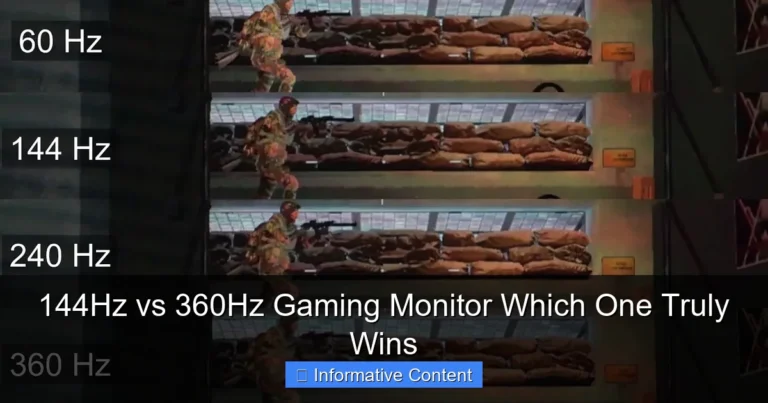
A 144Hz gaming monitor updates the screen 144 times per second. This is a massive jump from the standard 60Hz monitors many people are still using. Think about it: a 60Hz monitor shows 60 frames per second (FPS), while a 144Hz monitor can display up to 144 FPS. This difference is immediately noticeable. Movements on screen, from your character turning to enemies strafing, appear much smoother and more defined. It reduces motion blur and makes aiming in fast-paced games feel more precise. For most gamers, a 144Hz gaming monitor offers a fantastic balance of performance, visual quality, and affordability.
The Promise of 480Hz: Unprecedented Speed
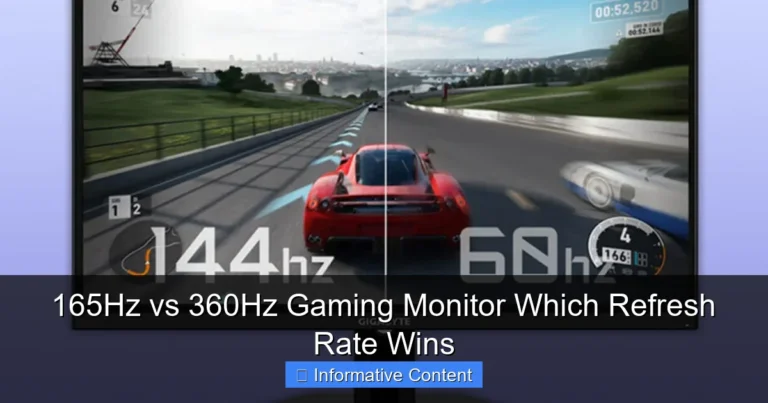
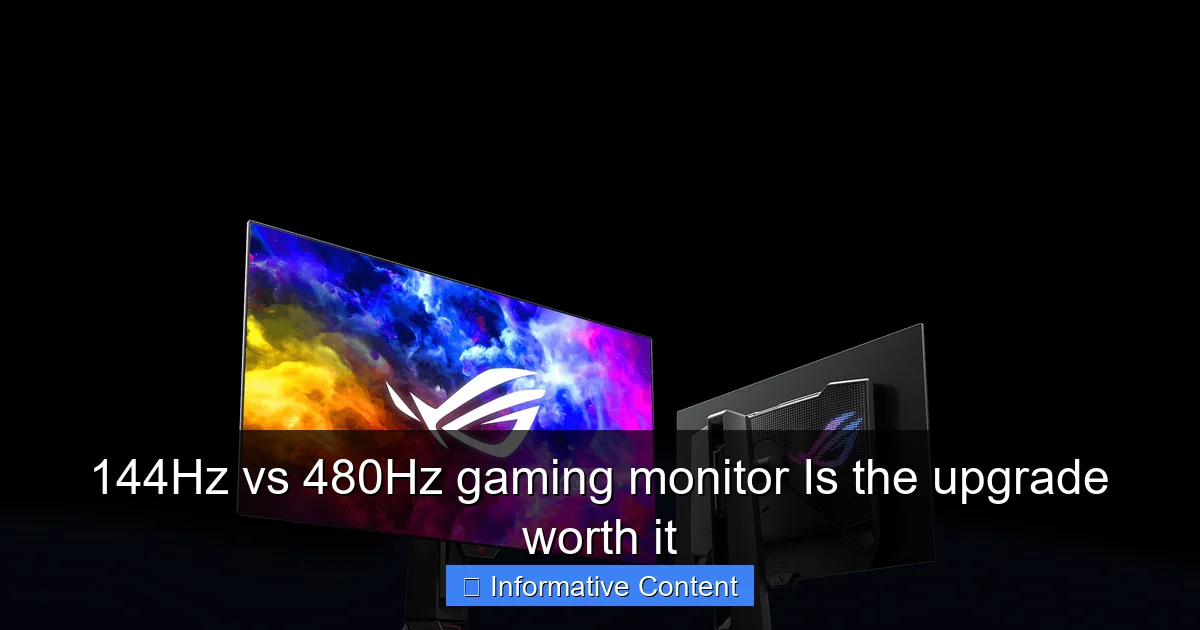
Now, let’s talk about the incredible 480Hz gaming monitor. This beast updates the screen a staggering 480 times per second! That’s four times as many updates as a 144Hz gaming monitor and eight times as many as a 60Hz monitor. The idea behind a 480Hz gaming monitor is to provide the absolute clearest motion possible, virtually eliminating motion blur and reducing input lag to an almost imperceptible level. This level of speed is specifically designed for the most demanding competitive esports titles where every single millisecond counts. Imagine seeing every tiny movement of an opponent with crystal clarity – that’s the promise of 480Hz.
The 144Hz Gaming Monitor Experience: A Solid Foundation
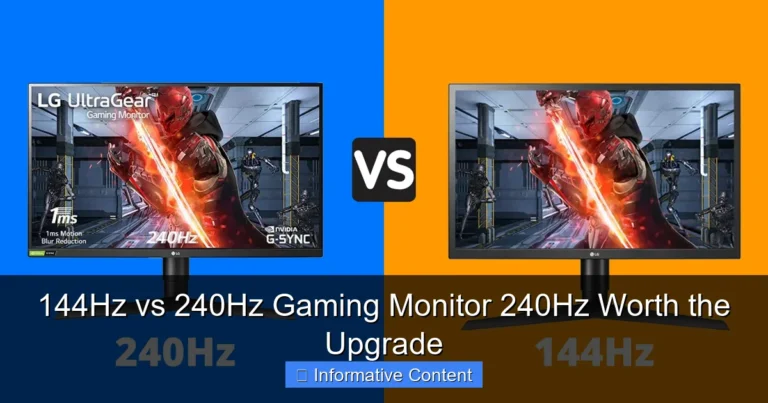
Visual guide about 144Hz vs 480Hz gaming monitor Is the upgrade worth it
Image source: dlcdnwebimgs.asus.com
For many years, and even today, the 144Hz gaming monitor has been considered the sweet spot for serious gamers. It’s where you start to feel a truly significant difference in gameplay fluidity and responsiveness.
Why 144Hz is Still Great
The jump from 60Hz to a 144Hz gaming monitor is often described as a “game-changer.” It’s one of those upgrades that once you experience it, you can’t go back.
- Smoothness You Can Feel: Whether you’re playing an FPS, an action RPG, or a racing game, everything just looks and feels smoother. Camera pans are less juddery, and character movements are more fluid.
- Reduced Input Lag: While not as low as 480Hz, 144Hz monitors significantly reduce the delay between your input (mouse click, keyboard press) and what you see on screen compared to 60Hz. This can give you an edge in competitive scenarios.
- Widespread Compatibility: Most modern graphics cards can comfortably push 144 FPS in many games, especially if you adjust settings. This makes a 144Hz gaming monitor accessible to a broad range of PC builds.
- Affordability: 144Hz monitors are now mainstream, offering a wide variety of options at competitive prices. You can find excellent 144Hz gaming monitor options across different panel types (IPS, VA, TN) and resolutions.
Who Benefits Most from 144Hz?
A 144Hz gaming monitor is ideal for the vast majority of PC gamers.
- Competitive Gamers (Non-Pro): If you enjoy competitive games like Valorant, CS:GO, Apex Legends, or Call of Duty, a 144Hz gaming monitor will give you a significant advantage over players on 60Hz.
- Enthusiast Gamers: For anyone who loves playing a wide variety of games and wants a premium visual experience without breaking the bank, 144Hz is a perfect fit.
- Content Creators: Smooth playback and editing can also benefit from higher refresh rates.
If you’re upgrading from a 60Hz monitor, a 144Hz gaming monitor is likely the most impactful and cost-effective upgrade you can make to your visual gaming experience.
Diving into the 480Hz Gaming Monitor: Unprecedented Speed
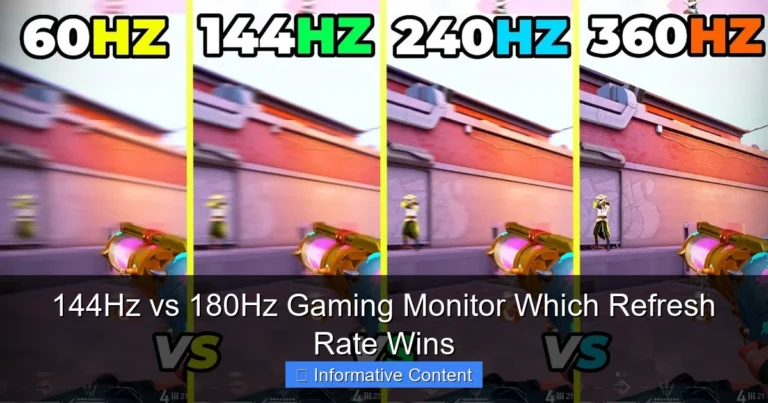
Visual guide about 144Hz vs 480Hz gaming monitor Is the upgrade worth it
Image source: dlcdnwebimgs.asus.com
Now, let’s shift gears to the cutting-edge of monitor technology: the 480Hz gaming monitor. This refresh rate isn’t just about “more frames”; it’s about pushing the absolute limits of human perception and technological capability for a very specific type of user.
The Advantages of a 480Hz Gaming Monitor
The benefits of a 480Hz gaming monitor are primarily geared towards achieving the ultimate competitive advantage.
- Unmatched Motion Clarity: At 480Hz, motion blur is virtually non-existent. Fast-moving objects appear incredibly sharp and defined, allowing you to track targets with extreme precision. This can be crucial in games where split-second target acquisition is key.
- Minimal Input Lag: Each frame is displayed for a fraction of a millisecond. This significantly reduces system latency, making your inputs feel almost instantaneous. For professional players, this means the difference between a headshot and a miss.
- Potential for Competitive Edge: In esports, where prize pools are massive and careers are on the line, any advantage, no matter how small, is sought after. A 480Hz gaming monitor could theoretically provide that fractional edge.
- Future-Proofing: While today’s hardware struggles, a 480Hz gaming monitor represents the future of high-performance displays. As GPUs become more powerful, reaching 480 FPS will become more feasible.
The Realities and Challenges of 480Hz
As exciting as 480Hz sounds, there are significant hurdles and considerations.
- Exorbitant Hardware Demands: This is the biggest obstacle. To get a consistent 480 FPS in games, even competitive esports titles, you need an incredibly powerful CPU and the absolute latest, top-tier GPU (like an RTX 4090 or RX 7900 XTX). Most games, especially graphically intensive AAA titles, simply cannot run at 480 FPS on any current hardware. You’d primarily see these frame rates in older or less demanding esports titles like CS:GO, Valorant, or Overwatch, often at lower graphics settings.
- Diminishing Returns for the Human Eye: The jump from 60Hz to 144Hz is very noticeable. The jump from 144Hz to 240Hz is less so, but still perceptible for many. From 240Hz to 360Hz, it becomes even harder to distinguish for the average person. The leap to a 480Hz gaming monitor is likely to be almost imperceptible for all but the most finely tuned eyes, often in very specific, controlled scenarios. The difference might be more about reducing *system latency* than a purely visual ‘smoothness’ improvement.
- High Cost and Limited Availability: Being bleeding-edge technology, 480Hz gaming monitors are very expensive. They are also currently less common than 144Hz or even 240Hz monitors, meaning fewer options and potentially higher prices.
- Connectivity Requirements: To achieve 480Hz, you’ll need the latest display connections, typically DisplayPort 2.1, and compatible cables. Older GPUs or cables might not support this bandwidth.
Is the Upgrade Worth It? Factors to Consider
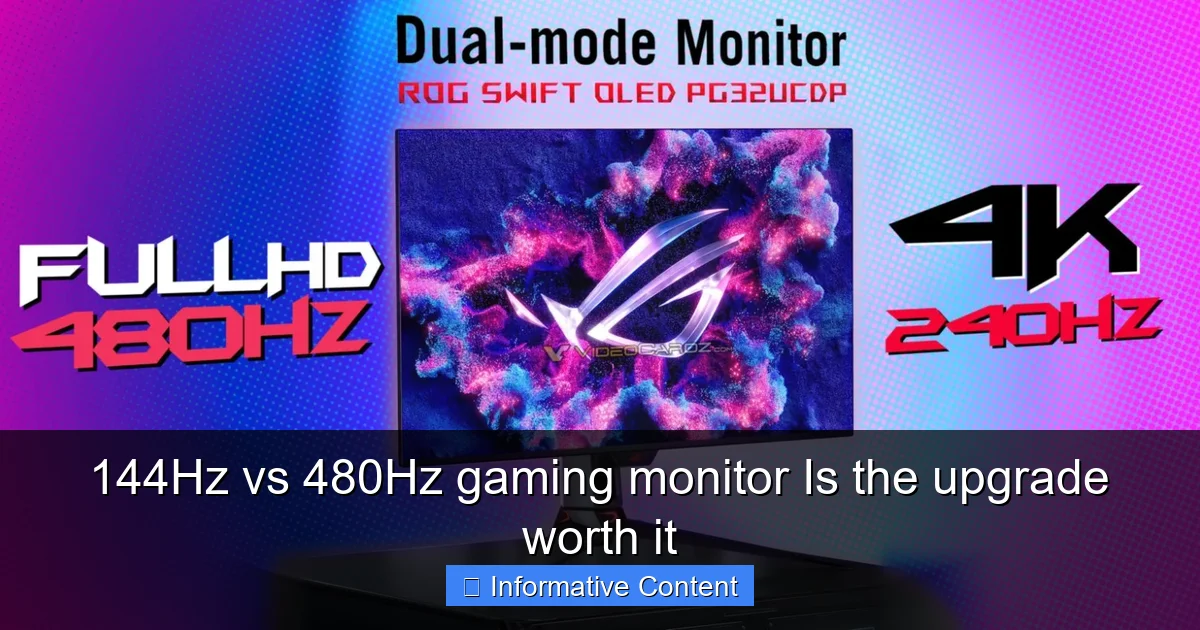
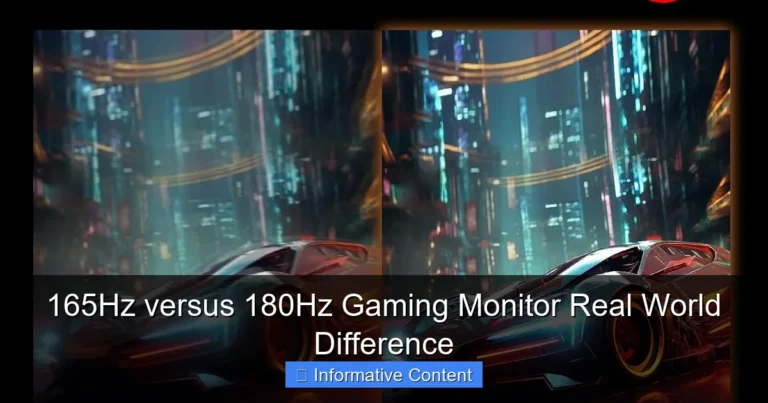
Visual guide about 144Hz vs 480Hz gaming monitor Is the upgrade worth it
Image source: static.tweaktown.com
Deciding whether a 480Hz gaming monitor is worth it over a 144Hz gaming monitor boils down to several key factors that are unique to your gaming setup and habits.
Your Games and Genre
- Competitive FPS (CS:GO, Valorant, Overwatch, etc.): If you’re an aspiring or professional esports player in these specific titles, where every millisecond matters, and your PC can hit 480 FPS, a 480Hz gaming monitor might offer a marginal but crucial competitive edge.
- Fast-Paced Action (Apex Legends, CoD, Fortnite): While these games are fast, consistently hitting 480 FPS is very challenging, even with top-tier hardware. A 144Hz or 240Hz monitor is usually more than sufficient.
- Story-Driven AAA Titles (Cyberpunk 2077, Starfield, Elden Ring): For these games, visual fidelity and immersion are often prioritized over raw frame rate. Achieving 480 FPS is impossible, and even 144 FPS can be a stretch at higher settings. A 144Hz gaming monitor is perfectly adequate here, allowing you to enjoy beautiful graphics without feeling you’re missing out.
Your PC Hardware
This is perhaps the single most critical factor.
- GPU Power: Do you have an RTX 4090 or RX 7900 XTX? Even with these cards, reaching 480 FPS is limited to specific, less demanding games. If you have anything less, consistently hitting 480 FPS is a pipe dream. A 144Hz gaming monitor is far more forgiving on your GPU, allowing you to maintain high frame rates even with mid-range cards.
- CPU Performance: High frame rates also put a tremendous strain on your CPU. A powerful, modern processor is essential to avoid bottlenecks when trying to hit 480 FPS.
- RAM and Storage: While less impactful than CPU/GPU, fast RAM and an NVMe SSD contribute to overall system responsiveness.
If your PC can’t consistently push 480 frames per second, buying a 480Hz gaming monitor is like buying a Ferrari to drive in a traffic jam – you’re paying for performance you can’t actually use.
Your Budget
This is straightforward.
- 480Hz Monitors: Expect to pay a premium. These are high-end niche products.
- 144Hz Monitors: You can find excellent 144Hz gaming monitor options at various price points, from budget-friendly to premium, offering great value.
Consider the total cost: monitor + the necessary PC hardware upgrade. Often, the money saved by sticking with a 144Hz gaming monitor could be invested in a better GPU or other peripherals that offer more tangible benefits.
Your Skill Level and Ambition
- Professional Esports Player: If gaming is your career and literally every advantage counts, and you have the hardware to match, then a 480Hz gaming monitor might be a worthwhile investment for the absolute minimum latency and motion blur.
- Serious Competitive Gamer: If you’re highly competitive but not a professional, a 144Hz or 240Hz gaming monitor likely provides 99% of the benefit without the extreme cost or hardware requirements. The difference between 240Hz and 480Hz is very subtle.
- Casual Gamer: For most casual players, even 144Hz is a luxurious upgrade. A 480Hz gaming monitor would be complete overkill and a waste of money unless you simply enjoy having the absolute best technology available.
Practical Implications and Who Benefits Most
Let’s break down who genuinely stands to gain from a 480Hz gaming monitor versus who is better off with a 144Hz gaming monitor.
For the Elite Competitive Esports Player
This is the primary target audience for a 480Hz gaming monitor. If you are a professional or aspiring professional in games like CS:GO or Valorant, where your livelihood depends on razor-sharp reflexes and precision, and you already have an absurdly powerful PC, then a 480Hz gaming monitor represents the current peak of performance. The marginal gains in input latency and motion clarity, however small, could theoretically provide a winning edge in high-stakes matches. For this tiny percentage of gamers, the investment might make sense.
For the Enthusiast Gamer with Deep Pockets
If you love having the absolute latest and greatest technology, have a no-compromise budget, and want to “future-proof” your setup as much as possible, then a 480Hz gaming monitor could be an exciting (albeit expensive) addition. However, understand that you’ll likely only fully utilize its potential in a limited number of games at optimal settings. For many AAA titles, even your top-tier rig will struggle to maintain 144 FPS, let alone 480 FPS.
For the Average to Serious Gamer
For 99% of gamers, a 144Hz gaming monitor remains the smartest and most practical choice. It offers a significant, undeniable improvement over 60Hz. It’s affordable, widely compatible with modern hardware (without requiring an RTX 4090), and provides an incredibly smooth and responsive gaming experience across a wide range of genres. The perceptible difference between 144Hz and 480Hz is far less dramatic than the jump from 60Hz to 144Hz, and the cost-to-benefit ratio for most users heavily favors 144Hz.
Tips for Maximizing Your Monitor
Regardless of your choice, here are some tips:
- Enable G-Sync/FreeSync: Make sure adaptive sync is enabled on your monitor and in your GPU settings. This helps eliminate screen tearing and stuttering by synchronizing your monitor’s refresh rate with your GPU’s frame rate.
- Check Cables: Use a DisplayPort 1.4 or 2.1 cable (for 480Hz) or HDMI 2.0/2.1 to ensure you can actually achieve the advertised refresh rate at your desired resolution.
- Adjust In-Game Settings: Lowering graphics settings in competitive games can significantly boost your FPS, allowing you to get closer to your monitor’s maximum refresh rate.
- System Optimization: Keep your drivers updated, close background applications, and ensure your PC is running optimally to maximize frame rates.
Conclusion: Is the 144Hz vs 480Hz Gaming Monitor Upgrade Worth It?
So, after all this discussion, is the upgrade from a 144Hz gaming monitor to a 480Hz gaming monitor truly worth it? The answer, as is often the case with cutting-edge tech, is nuanced: it depends entirely on who you are as a gamer and what you expect from your setup.
For the vast majority of gamers – from casual players to serious competitive enthusiasts – a 144Hz gaming monitor remains the undisputed champion. It offers a truly transformative upgrade from 60Hz, providing buttery-smooth visuals and responsive gameplay that will significantly enhance your experience, all without requiring a second mortgage or a supercomputer. The value proposition of a 144Hz gaming monitor is incredibly strong, delivering a fantastic balance of performance and affordability.
The 480Hz gaming monitor, on the other hand, is a niche product, designed for the absolute peak of competitive play. It’s for the professional esports athlete who requires every conceivable advantage, has an unlimited budget, and owns the most powerful PC money can buy, capable of consistently pushing hundreds of frames per second in specific titles. For these elite few, the marginal gains in motion clarity and input latency might be the difference between victory and defeat.
For everyone else, investing in a 480Hz gaming monitor right now is likely an overindulgence. The cost-to-benefit ratio is simply not there, especially when considering the immense hardware demands and the subtle nature of the visual improvement beyond 240Hz. Stick with a high-quality 144Hz (or even 240Hz) gaming monitor, ensure your PC can consistently hit those frame rates, and you’ll be enjoying a world-class gaming experience without breaking the bank. The journey to ultimate refresh rates is exciting, but for now, 144Hz still holds its crown as the practical king.
Frequently Asked Questions
What is the main benefit of a higher refresh rate monitor like 480Hz?
The main benefit of a higher refresh rate like 480Hz is incredibly smooth motion clarity and significantly reduced input lag. This makes fast-moving objects appear sharper and more defined, allowing for better target tracking and nearly instantaneous response times, crucial for competitive gaming.
Will a 480Hz monitor make me a better gamer?
A 480Hz gaming monitor can provide a marginal competitive edge for professional esports players by minimizing latency, but it won’t magically make you a better gamer. Skill, practice, and game sense are far more important factors. For most gamers, the improvement will be negligible.
Are 480Hz monitors readily available and affordable?
No, 480Hz gaming monitors are currently cutting-edge technology, meaning they are less readily available than 144Hz or 240Hz options. They also come with a premium price tag, making them a significant investment for a niche market.
What’s the biggest challenge with owning a 480Hz gaming monitor?
The biggest challenge is having PC hardware powerful enough to consistently generate 480 frames per second (FPS) in games. Only the absolute highest-end GPUs and CPUs can achieve this, and even then, only in less graphically demanding esports titles at optimized settings.
Should I prioritize resolution or refresh rate for gaming?
This depends on your preference. For competitive esports, refresh rate (and the resulting low latency) is often prioritized. For immersive single-player games, a higher resolution (like 1440p or 4K) might be more desirable, even if it means a lower refresh rate like 144Hz or 60Hz.
Is the jump from 144Hz to 480Hz as noticeable as 60Hz to 144Hz?
No, the jump from 144Hz to 480Hz is significantly less noticeable than the jump from 60Hz to 144Hz. Most people can immediately tell the difference from 60Hz to 144Hz, but discerning the difference between 144Hz and 480Hz requires a very keen eye and specific, fast-paced scenarios.